 English
  Español
Excursions
-
Home

-
Excursions
- Luxor Excursions
Kom Ombo & Edfu Temples
Luxor
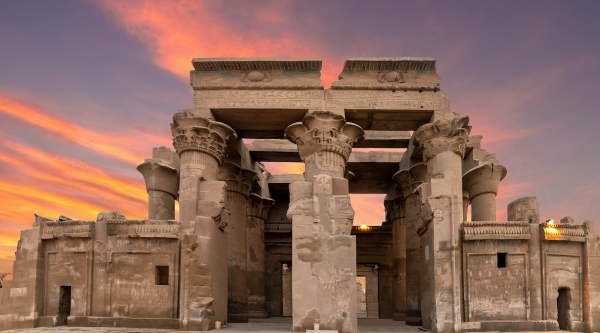
Kom Ombo is a highly recommended tour, it lasts roughly an hour and will take you on a journey through the past to meet the temples of Haroeris, the falcon god, and Sobek, the crocodile god. Subsequently, you will make a brief visit to the chapel of Hathor, a construction attached to the before-mentioned temples where you will find an exhibition of mummified crocodiles in good condition that will help you better understand the culture of ancient Egypt and the importance of those creatures. It is a temple designed differently complying with the requirement, at a given moment, to maintain the balance between two Dyads.
Edfu Temple is one of the most striking and complete of ancient Egyptian temples and is dedicated to the worship of the god Horus. Situated on the western bank of the Nile, its construction began during the reign of Ptolemy III (246–221 BC) in 237 BC, but was completed in the reign of Ptolemy XII (80–51 BC) in 57 BC, 180 years later.
The temple remained buried under layers of settlement debris for millennia, which is why its architectural and decorative elements have survived so well. In 1860 the French archaeologist Auguste Mariette uncovered and restored parts of the temple.
The temple is fronted by two massive pylons that bear scenes of Ptolemy XII conquering his enemies and worshiping deities. Two large granite statues of the falcon-god Horus stand before the pylons. Once through the pylons you enter into a large Peristyle court lined with columns decorated with floral capitals.
Beyond this court are two Hypostyle Halls, the first illustrates the temple’s foundation with the king engaged in worship, the second holds scenes of Horus’ journey in a sacred bark accompanied by the goddess Hathor. From the second Hypostyle Hall is the Transverse Hall, then the Sanctuary of the temple
$90.00 /Per Person
Sound & Light in Karnak Temple
Luxor
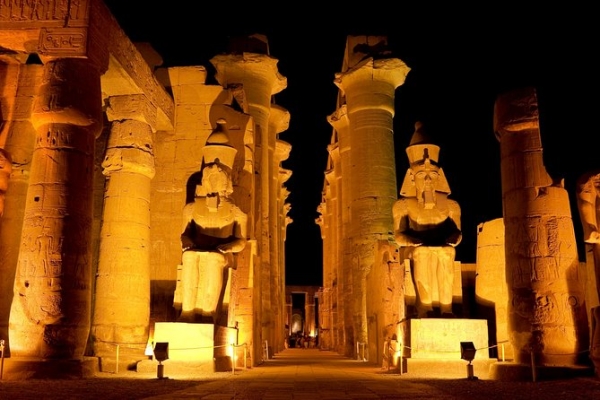
The Sound and Light show in the largest open-air museum in the world, this magical temple will be back to life, especially the Egyptian Gods and Goddesses. This significant temple is the most popular tourist spot. To enjoy an exceptional journey at the Karnak temple Sound and Light show, which will steal your heart by revealing the ancient secrets and mysteries.
$35.00 /Per Person
Hot Air Ballon
Luxor
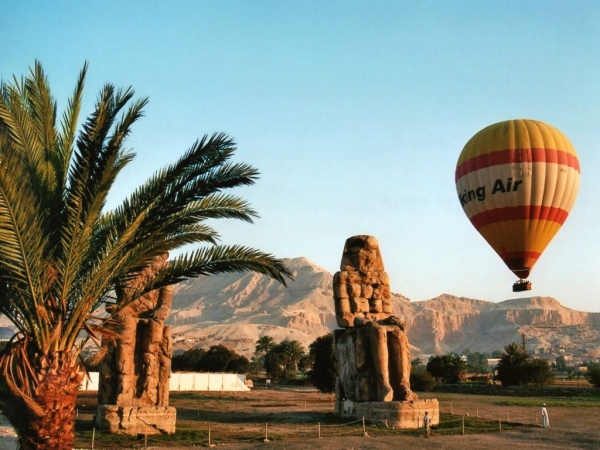
To an extraodniry experience, taking your hot air ballon in luxor in the early morning, enjoying the sightseeing of luxor city from above and feel like you are flying.
$90.00 /Per Person
West Bank of Luxor
Luxor
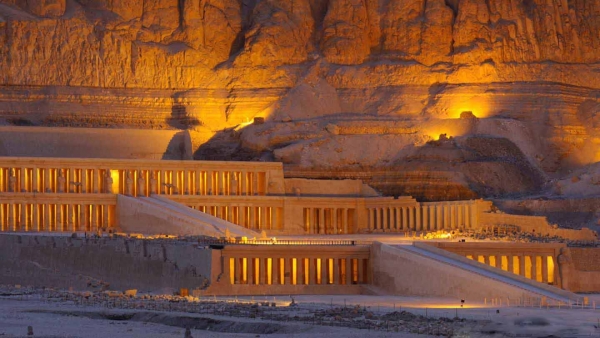
The West Bank of luxor contains one the most fasinating temples, Tombs and the largest amount of treasure in the world. where you can visit Valley of the Kings, the Temple of Queen Hatshepsut and Colossi of Memnon.
Cause the sun sets on the West Bank, the ancient Egyptians buried thier dead in the west bank that is why it became thier necropolis, where it is filled with mortuary temples and tombs.
$75.00 /Per Person
East Bank of Luxor
Luxor
The Nile River splits Luxor into two parts: the East Bank and the West Bank.
The East Bank of Luxor is the location of Luxor town. This is where most Egyptians live and work and it is also where you will find the majority of hotels and restaurants.
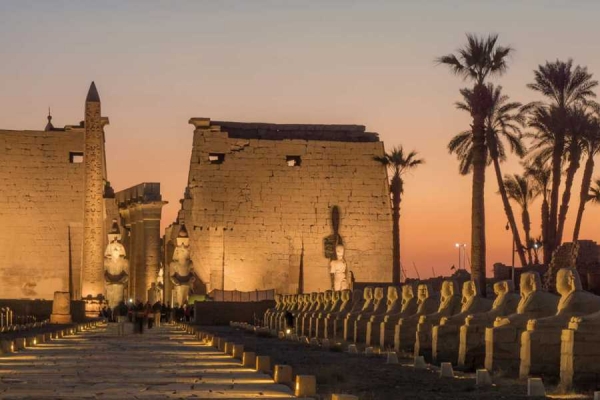
There are just a few notable sites to visit on this side of the river, but two of these (Karnak Temple and Luxor Temple) are two of the most spectacular sites to visit in Egypt.
The Temples of Karnak represent the world's largest religious complex that is also a showcase of the splendor and decadence of Egyptian art over nearly 20 centuries dating back to the fifteenth century BC. The highlight of this temple is the hypostyle hall built during the reign of Ramses II, and the Sacred Beetle.
The tour proceeds by visiting the beautiful temple of Luxor. Built during the reign of Ramases II in its newest part and by Tuthmosis III in its oldest, you will be able to appreciate the perfection and dedication of Egyptian art during the XVII dynasty. It takes just 45 minutes to walk from one temple to the other, and on your way, you will observe several sphinxes and hear a number of stories about the pharaohs responsible for their construction.